-
Courses

Courses
Choosing a course is one of the most important decisions you'll ever make! View our courses and see what our students and lecturers have to say about the courses you are interested in at the links below.
-
University Life

University Life
Each year more than 4,000 choose University of Galway as their University of choice. Find out what life at University of Galway is all about here.
-
About University of Galway

About University of Galway
Since 1845, University of Galway has been sharing the highest quality teaching and research with Ireland and the world. Find out what makes our University so special – from our distinguished history to the latest news and campus developments.
-
Colleges & Schools
Colleges & Schools
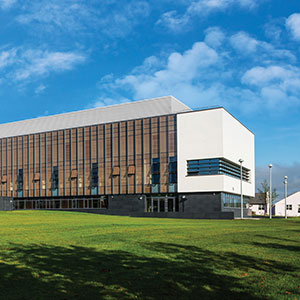
University of Galway has earned international recognition as a research-led university with a commitment to top quality teaching across a range of key areas of expertise.
-
Research & Innovation

Research & Innovation
University of Galway’s vibrant research community take on some of the most pressing challenges of our times.
-
Business & Industry
Guiding Breakthrough Research at University of Galway
We explore and facilitate commercial opportunities for the research community at University of Galway, as well as facilitating industry partnership.
-
Alumni & Friends

Alumni & Friends
There are 128,000 University of Galway alumni worldwide. Stay connected to your alumni community! Join our social networks and update your details online.
-
Community Engagement
Community Engagement
At University of Galway, we believe that the best learning takes place when you apply what you learn in a real world context. That's why many of our courses include work placements or community projects.








Learning Sciences (Structured PhD)
Structured PhD in Learning Sciences
Course Overview
Information and communications technologies (ICTs) create new potential to enhance learning, education and human development through adaptive, blended and personalised learning environments. In the last twenty years, innovations in computer technology enable us to design educational experiences that are potentially more engaging and effective. NUI Galway’s Structured Ph.D. in the Learning Sciences is the first denominated and structured doctoral programme of its kind in Europe. The aim of the programme is to educate highly-skilled graduates who can draw on a range of research and development skills to conceptualise, design, deploy and evaluate information and communications technologies (ICTs) to enhance learning in different educational contexts and settings.
Students are selected by a Course Committee comprising the course Directors, prospective research supervisor and Head of School of Psychology or Education. Entrants are expected to have no less than an upper second class honours degree in education, psychology or a discipline related to educational technologies (e.g. information technology, computer science, business information systems). If students do not have this basic qualification they must have demonstrated high ability by some other means (e.g., through publications or achievement in a higher degree).
Programmes Available
Important: this programme is not on offer for entry 2021.
Structured PhD (Learning Sciences), full-time
Structured PhD (Learning Sciences), part-time
Applications are made online via the NUI Galway Postgraduate Applications System.
Associated
Learning Outcomes
Entry Requirements
Selection is by a Course Committee comprising the Course Directors, research supervisor and Head of School of Psychology or Education. Entrants are expected to have no less than an upper Second Class Honours degree in education, psychology or a discipline related to educational technologies (e.g.,computer science). If students do not have this basic qualification they must have demonstrated high ability by some other means (e.g., achievement in a higher degree).
Who’s Suited to This Course
Current research projects
Current funded research opportunity
Work Placement
Related Student Organisations
Career Opportunities
Find a Supervisor / PhD Project
If you are still looking for a potential supervisor or PhD project or would like to identify the key research interests of our academic staff and researchers, you can use our online portal to help in that search
Research Areas
- ICT in education—Web 2.0, adaptive, virtual and blended learning, virtualisation, mobile learning, ubiquitous computing, haptics and embodied technologies
- Design-based research and educational innovation
- Philosophy of technology-enhanced learning
- Digital creativity, digital storytelling and new media
- Innovative, technology-enhanced contexts for development and learning
- New technologies in informal and non-formal learning settings
- Reinforcement and Extinction in digital learning contexts
- Engagement and learning
- Dynamic properties of learning in digital contexts
- Cognitive aspects of learning
- Design and impact of psychometric assessments in learning
- Critical thinking and critical thinking technology
- Systems thinking and systems thinking technology
- Creativity and mindfulness
- Problem-focused and solution-focused thinking
- Cognitive interventions for older adults
- Learning and skill development
- Development of computer-based protocols for training language and cognitive skills
- Relational Frame Theory and Behaviour Analysis and their applications in education and psychotherapy
- Online cognitive testing
Researcher Profiles
Course Fees
Fees: EU
€5,750 p.a. (€5,890 including levy) 2024/25
Fees: Non EU
€14,500 p.a. (€14,640 including levy) 2024/25
Extra Information
EU Part time: Year 1 €4,250 p.a. (€4,390 including levy) 2024/25
All students, irrespective of funding, must pay the student levy of €140.
Contact Us
Tony Hall
E: tony.hall@nuigalway.ie
Related links:
 Scholarships
 Research
 Graduate Studies Office